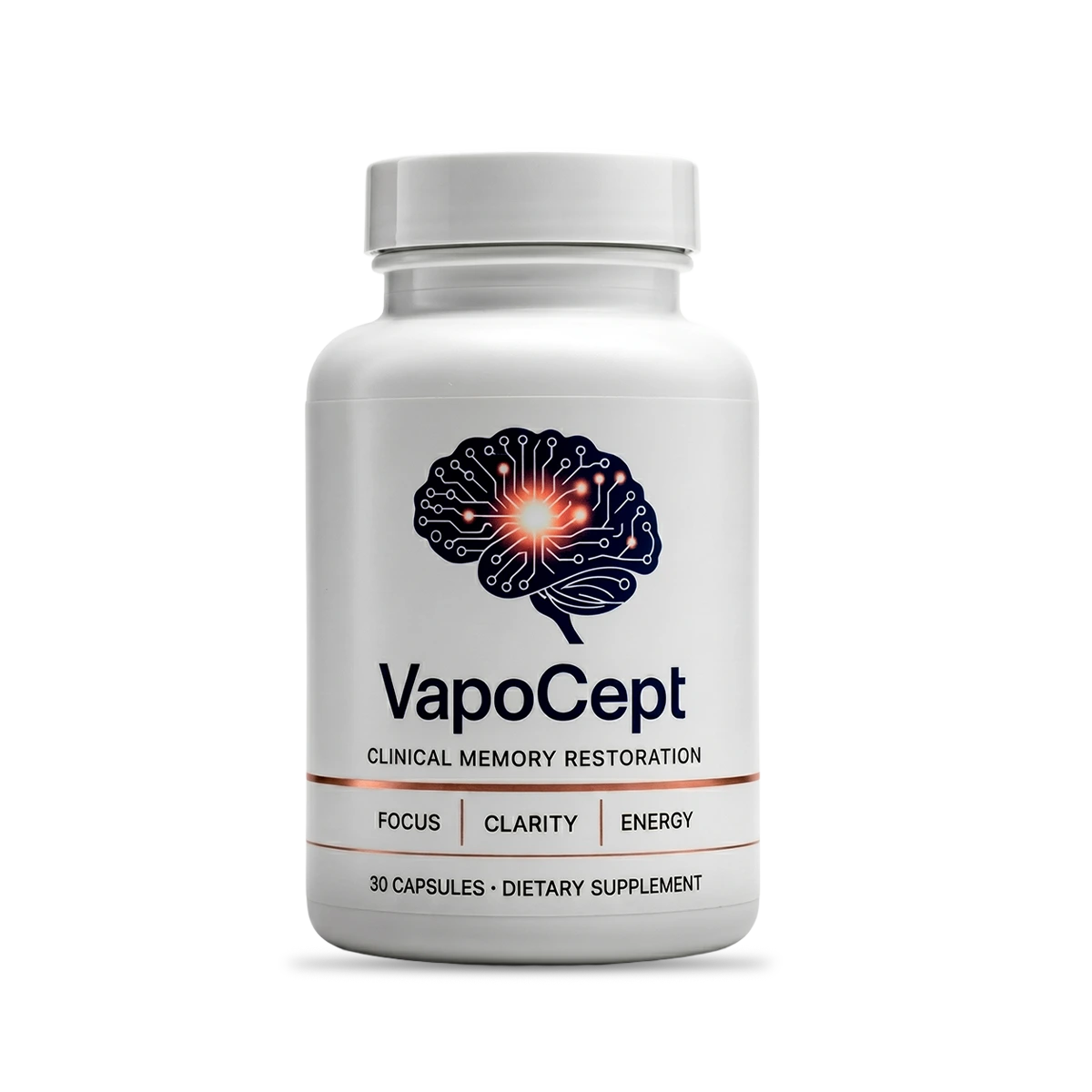
Every supplement page claims research backing. Few say which studies, how large, how long, or where the evidence runs out. This one does all four, and grades each of the six rather than averaging them into one confident sentence.
The limitation that applies to the whole category
No clinical trial has been conducted on VapoCept® as a finished product. Everything below concerns research on individual ingredients, usually studied alone, sometimes at doses that differ from those in this formula.
That is true of virtually every multi-ingredient supplement sold in the United States. Running a randomised controlled trial on a finished formula costs millions and takes years, and the regulatory framework does not require it. When a box says "clinically proven", the honest translation is usually "contains an ingredient that has been studied".
The grades
Marigold extract (lutein) — strongest. Coherent mechanism, consistent observational findings, supportive intervention data, excellent safety record. Lutein concentrates in neural tissue rather than passing through, and status tracks with memory and processing-speed performance in older adults.
Ginkgo Biloba — most data, most disagreement. Modest short-term findings on attention and recall in several trials; no reduction in dementia incidence in the largest and longest one. Both results are real.
Turmeric — strong lab, preliminary human. Excellent antioxidant characterisation, one encouraging 18-month trial in a small group, and a well-documented absorption problem that limits everything.
Green tea extract — good short-term, thin long-term. Reasonably consistent attention findings from the caffeine-theanine pairing. Multi-year cognitive-aging trials have not been run.
Bamboo extract — minimal. Documented for connective tissue and antioxidant activity; essentially no human cognitive research.
D-Glucosamine — indirect only. Large observational cardiovascular and inflammatory findings. No memory trial exists.
The cited studies
- DeKosky ST, Williamson JD, Fitzpatrick AL, et al. Ginkgo biloba for prevention of dementia: a randomized controlled trial. JAMA. 2008;300(19):2253–2262. — 3,069 adults aged 75+, median 6.1 years. Ginkgo at 120 mg twice daily did not reduce dementia incidence.
- Snitz BE, O'Meara ES, Carlson MC, et al. Ginkgo biloba for preventing cognitive decline in older adults: a randomized trial. JAMA. 2009;302(24):2663–2670. — Companion analysis; rates of cognitive decline did not differ from placebo.
- Small GW, Siddarth P, Li Z, et al. Memory and brain amyloid and tau effects of a bioavailable form of curcumin in non-demented adults. Am J Geriatr Psychiatry. 2018;26(3):266–277. — 18 months; improvement on a verbal memory measure and an attention task, in a small group.
- Hammond BR Jr, Miller LS, Bello MO, et al. Effects of lutein/zeaxanthin supplementation on the cognitive function of community dwelling older adults. Front Aging Neurosci. 2017;9:254. — 12 mg daily; improvements in complex attention and cognitive flexibility versus placebo.
- Haskell CF, Kennedy DO, Milne AL, Wesnes KA, Scholey AB. The effects of L-theanine, caffeine and their combination on cognition and mood. Biol Psychol. 2008;77(2):113–122. — The combination improved attention accuracy and reduced self-reported mental fatigue.
- Ma H, Li X, Sun D, et al. Association of habitual glucosamine use with risk of cardiovascular disease: prospective study in UK Biobank. BMJ. 2019;365:l1628. — 466,039 participants; observational, cannot establish cause.
The ingredient with no citation
Bamboo extract. We have not listed a study because we could not find human research on bamboo extract and cognitive outcomes that would honestly support one. Bamboo supplies bioavailable silica and flavonoid antioxidants, and silica has a documented role in connective tissue — but that is not evidence for memory or focus, and presenting it as though it were would undermine everything else on this page.
Reading a supplement study without being fooled
How many people? Twenty participants generates a hypothesis. Two thousand generates evidence. Both get described as "a study shows".
How long? Cognitive aging happens over decades. A six-week trial can tell you about alertness, not about long-term cognitive health.
What was measured? "Improved cognitive function" can mean a meaningful change on a validated battery, or a slightly faster score on one subtest out of twelve. The second is far more common.
Was it pre-registered? Publicly committing to the outcome measure before collecting data is what stops researchers reporting whichever of twelve measures looked best.
On "best" claims in this category
Lists naming a best brain health supplement, a best natural brain supplement, a best supplement for focus and concentration or the top memory supplements are mostly ordered by affiliate commission. The grades above are what a comparison should actually contain: which ingredient carries evidence, how much, and where it stops.
Things with better evidence than any supplement
If the goal is cognitive health rather than a purchase, the honest ranking puts several unglamorous interventions above everything on the shelf: blood pressure control in midlife, regular aerobic exercise, sufficient sleep, treating hearing loss, not smoking, and sustained mental and social engagement.
A well-labelled supplement sits alongside that list, not at the top of it. Anyone selling a capsule as a shortcut past those six is selling something that does not exist.
References describe research on individual ingredients, not on the finished VapoCept® product. The presence of a citation does not imply the researchers endorse VapoCept®. These statements have not been evaluated by the Food and Drug Administration.
See price & packages